
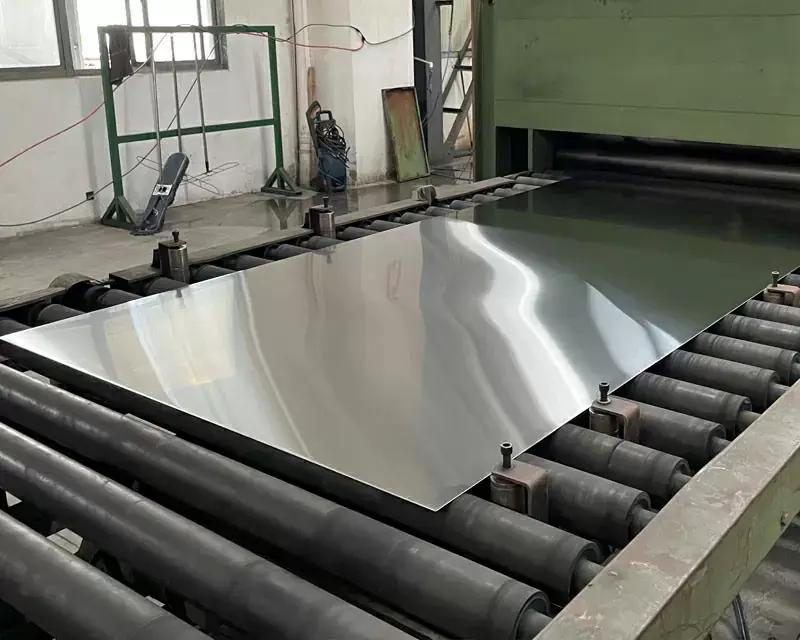
Key issues encountered in the production and processing of stainless steel plates generally involve the selection of techniques such as cutting or low-temperature plasma laser cutting for practical operations.
When cutting stainless steel plates, attention should be paid, and they should be delivered to support frames for protection. Generally, priority should be given to ensuring the immediate placement of rubber sheets. This way, overall, scratches can be effectively and significantly prevented. The cutting residue after plasma cutting must be cleaned. During the production and processing of stainless steel plates, special attention should be paid to various rubber coatings and their maintenance, especially during the sawing process. After sawing, residual oil stains or deposits on the workpiece must be removed. For mechanical processing and manufacturing of thick steel plate products, we should actually focus on the material protection of stainless steel plates during the processing and manufacturing stages, such as turning or milling. After the operation, oil stains, nails, and other dirt on the product surface must be thoroughly removed.
Regarding the forming, production, and processing of stainless steel plates, appropriate measures must be taken to prevent scratches and wrinkles on the surface caused by bending of steel coils or sheets. Additionally, in the production and processing of thick steel plates, from a very macroscopic perspective, processes such as riveting, welding, double-layer welding, and correction are typically immediately selected.
Related Posts
Online Message


Leave A Message
If you are interested in our products and want to know more details, please leave a message here, we will reply you as soon as we can.